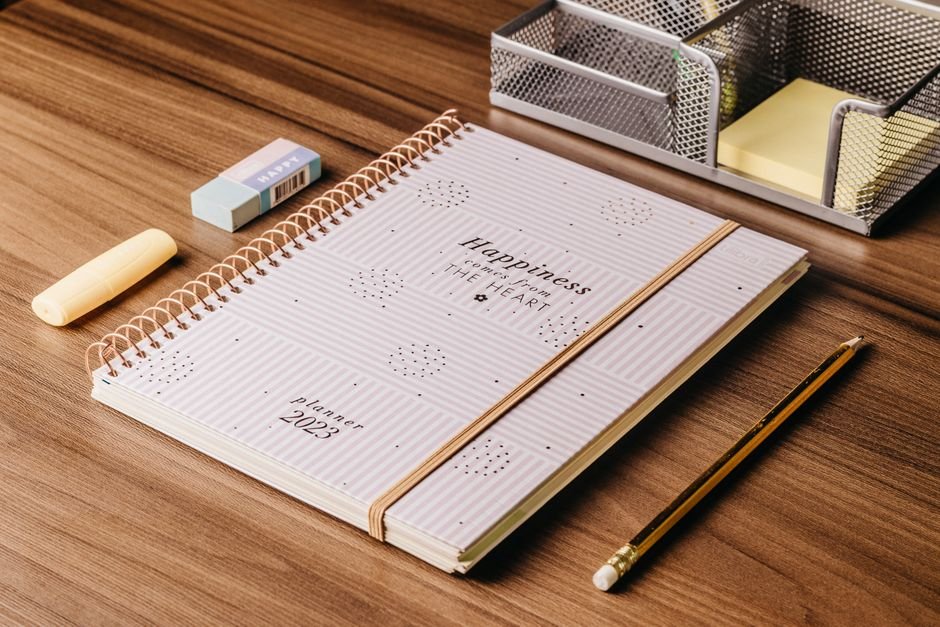
Shoppers are walking into Hobby Lobby, finding empty shelves where Happy Planner used to be, and drawing the obvious conclusion — the brand must be done. It’s not that simple.
The real picture involves an ownership change, staff reductions, a shift away from mass retail, and a product model that looks different than it did a few years ago. None of that means the business is closed. But it does mean things have changed, and customers deserve a straight answer about what’s going on.
Here’s what the evidence actually shows.
Happy Planner Is Still Open — But It Has Changed Significantly
The official Happy Planner website is active and processing orders. Their Instagram account is promoting new product lines, including the GO BIG Planners. Affiliates and YouTube creators are already covering 2026-dated planner selections, which means the brand’s product pipeline extends well into the future.
There has been no bankruptcy filing. No official closure announcement. No credible news report of a shutdown.
The confusion is real, but it comes from operational changes — not a closed business. If you’re trying to figure out whether to keep buying their products or plan around their continued existence, the answer is: they’re still here, just operating differently.
The Fleming Family Took Back Ownership — What That Actually Means
Happy Planner started as part of Me & My Big Ideas (MAMBI), a company founded by Stephanie Fleming’s family. At some point, the brand was sold to outside ownership. Then, reportedly, the Fleming family — Stephanie’s mother, sister, and brother — reacquired it.
Many customers first found out through thank-you cards included in recent orders, which listed the new owners by name. That’s an unusual way to learn about a corporate change, but it confirms the transition happened.
Ownership changes at small-to-mid-size consumer brands almost always cause short-term disruption. You typically see delayed launches, reduced product counts, slower customer service, and internal reshuffling. That’s not collapse — that’s restructuring. The two can look similar from the outside, especially when you’re a customer waiting on a product drop that keeps getting pushed back.
This is the root cause of most of the confusion around Happy Planner right now. The founding family taking back control of a brand they built is not a sign of failure. It’s a reset.
Staff Reductions and the Spring Release Delay Explained
Users in Facebook groups and YouTube comments have reported that Happy Planner laid off a significant number of staff recently. These reports are anecdotal — no confirmed headcount figures exist publicly — but the pattern matches what you’d expect after an ownership transition where costs need to be cut quickly.
The Spring release was delayed, pushed to April 14, which frustrated loyal customers who expected consistent launch timing. Fewer discounts and slower customer service responses have also been noted. These are real problems if you’re depending on the brand for regular purchases.
But they are signs of internal transition, not a business preparing to shut down. Companies that are actually closing don’t delay spring releases — they cancel them. Happy Planner delayed theirs and then released it. That distinction matters.
If staffing is genuinely reduced, you should expect customer service to be slower than it used to be. That’s worth knowing before you place a large order or need a return handled quickly.
Why Happy Planner Products Are Harder to Find in Stores
Multiple customers have noticed reduced or missing Happy Planner products at Hobby Lobby specifically. This is real — the shelf space has dropped. But reduced in-store presence doesn’t mean a company is shutting down. It often means the opposite: a deliberate decision to pull back from low-margin retail and push customers to buy directly.
Plenty of consumer brands have made this exact move. They shrink their department store or craft store footprint, build out their own website, and focus on direct-to-consumer sales where margins are better and they control the customer relationship.
Happy Planner’s website now prominently features custom planners, build-your-own options, and undated formats. These products don’t fit standard retail shelf models — you can’t stock a “build your own” planner at Hobby Lobby. So as the brand has shifted toward customization and online-first sales, its retail footprint has naturally shrunk.
Reddit users in the Happy Planner community have noted that most products appear to have migrated to the custom planner section on the site, describing it as a different business model rather than the brand disappearing. That framing is accurate.
What Long-Time Customers Are Actually Experiencing
It’s worth being honest here. The customer experience has gotten worse for a lot of people, at least in the short term. Facebook group discussions describe fewer accessories, items going out of stock and staying that way, packaging changes, and a general sense that the brand isn’t what it used to be.
Some long-time users have switched to other brands entirely, citing concerns about product consistency and the uncertainty around ownership changes. Erin Condren comes up frequently as an alternative people have moved to.
At the same time, other customers are still actively buying and seem satisfied with the new custom planner options and formats. The GO BIG Planners have attracted positive attention for their larger, easier-to-read layouts.
So the picture is mixed. The brand is still operating. The product line has shifted. Some customers are fine with that; others aren’t. Both responses are reasonable depending on what you were using Happy Planner for.
Should You Keep Buying Happy Planner Products?
That depends on how you use them. Here’s a straightforward way to think through it:
- If you buy mostly in-store at Hobby Lobby or other craft chains: Your options are more limited now. Expect a smaller selection, and don’t count on consistent availability.
- If you rely on specific disc sizes, inserts, or accessories: The reduced SKU count is a real concern. Check current availability on the website before committing to new notebooks or planner formats that require matching components.
- If you’re comfortable ordering online directly: The website is active, new product lines are being developed, and 2026 planners are already in the pipeline. The brand is still a viable option.
- If fast customer service matters to you: Current reports suggest response times are slower. Factor that in before placing a large order.
One practical tip: before buying into any new planner system, check whether the brand has posted on social media in the last 30 days, whether their website is actively taking orders, and whether future-dated products are being promoted. For Happy Planner, all three are currently true.
For broader context on how consumer brands handle transitions like this — including ownership changes, retail pullbacks, and product line resets — StartBizWire covers business news and brand strategy in plain language.
The Bottom Line
Happy Planner is not going out of business. The brand is operating, selling products, marketing new lines, and developing future releases. What it is doing is going through a significant transition — new ownership, reduced staff, a smaller retail footprint, and a shift toward online-direct and custom products.
Those changes have caused real disruptions: delayed releases, shorter product selections, slower service, and less shelf space in stores. Some customers have decided that’s enough reason to move on. Others are sticking with it and finding value in the new formats.
Neither response is wrong. But the decision should be based on what’s actually happening — not on empty shelves at one craft store chain.
Read Also: