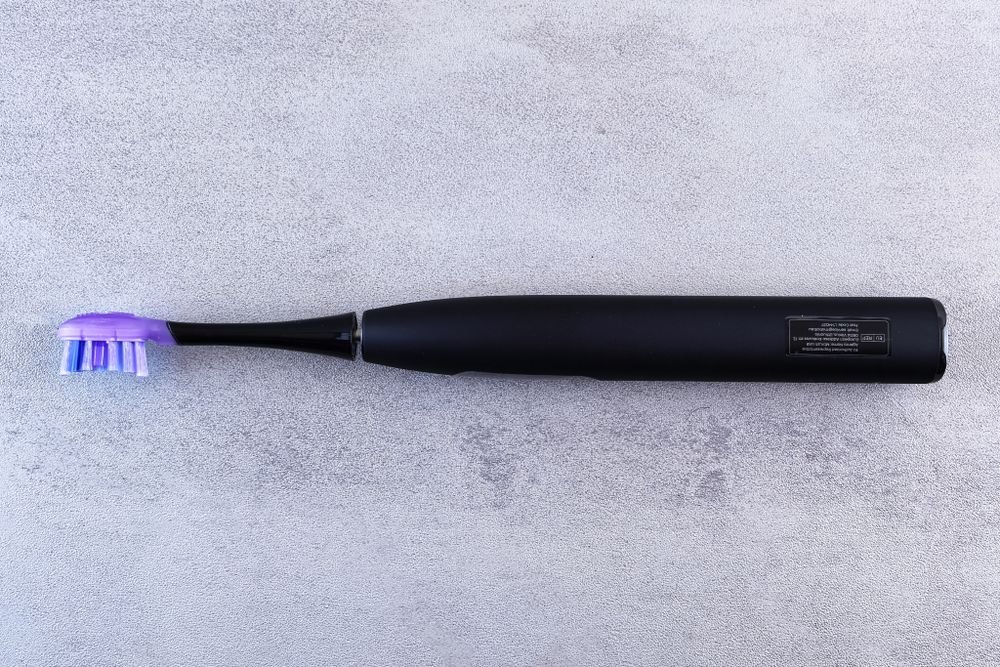
Bruush raised roughly $20 million on Nasdaq in August 2022. It was positioned as a sleek, modern alternative to Oral-B and Philips Sonicare — a Canadian startup that would sell you a sonic toothbrush online and keep sending you fresh brush heads every three months.
Less than two years later, its stock was suspended from trading, and two planned financing deals were quietly pulled. So what actually happened to Bruush? And is the company still operating?
This article walks through what is verified, what is rumored, and what customers and investors should do right now to assess the situation.
What Bruush Is and How Its Business Worked
Bruush Oral Care Inc. was founded in Vancouver around 2017–2018. It sells electric toothbrushes directly to consumers online, positioning itself as a mid-priced lifestyle brand against the big dental players.
The core business model is a subscription. A customer buys a sonic toothbrush kit and then receives three replacement brush heads every 12 weeks for around $18. Simple, recurring, and predictable — at least in theory.
In June 2021, Bruush acquired The Dollar Brush, another direct-to-consumer electric toothbrush subscription brand. That acquisition signaled expansion ambitions and a broader roll-up strategy in the DTC oral care space.
The problem with subscription models like this is that they burn cash early and take time to become profitable. You spend heavily on customer acquisition through influencer marketing and social media, then wait for subscribers to stick around long enough to cover those costs. That structure creates a heavy dependency on outside capital — which is exactly why Bruush went public.
The Nasdaq IPO and What It Was Supposed to Accomplish
Bruush filed to go public on Nasdaq in 2022 with a proposed raise of $17.25 million. On August 22, 2022, it announced the closing of its IPO — 3,728,549 units priced at $4.16 per unit, generating gross proceeds of approximately $20 million (US$15.5 million).
Common shares listed under the ticker BRSH and warrants under BRSHW on the Nasdaq Capital Market.
The goal of the IPO was straightforward: use public capital to fuel growth, scale the subscription model, and build brand credibility. Going public also gives a company a currency (its stock) that can be used for future acquisitions or fundraising rounds.
But micro-cap IPOs like this one carry real structural risks. Small float, limited trading volume, and a share price that can collapse quickly if the growth story doesn’t materialize fast enough. Those risks showed up in Bruush’s case sooner than most investors likely expected.
The Documented Signs of Financial Distress
The clearest way to understand what went wrong is to look at the events in order. Each one, on its own, might be explainable. Together, they paint a specific picture.
July–August 2023: Reverse Stock Split
Bruush announced a 1-for-25 reverse stock split, effective pre-market on August 1, 2023. This means every 25 shares a shareholder held were combined into 1 share, with the price adjusted upward proportionally.
Companies do reverse splits to boost their share price above a minimum threshold — in this case, Nasdaq’s $1.00 minimum bid requirement. A reverse split does not add any value to the company. It is a mechanical fix to a listing problem, and it almost always signals that the stock price has fallen badly.
July 26, 2023: Nasdaq Delisting Determination
On July 26, 2023, Bruush disclosed that it had received a formal determination from Nasdaq to delist its securities from the Nasdaq Capital Market. The company said it would appeal the decision to the Nasdaq Listing Council.
Critically, while that appeal was pending, Bruush’s securities were suspended from trading. Investors could not buy or sell shares on the exchange.
April 2024: Two Registration Statements Withdrawn
In an April 2024 company update, Bruush disclosed that it had filed two Form RW requests with the SEC — essentially asking to withdraw registration statements it had filed just months earlier.
Specifically, it pulled a Form F-1 (filed January 22, 2024) and a Form F-4 (filed January 29, 2024). The company stated explicitly that it “no longer plans to consummate the offerings or transactions described therein.”
Translation: Bruush had been trying to raise more capital or complete some form of transaction, and those plans were abandoned.
Taken together — the reverse split, the delisting notice, the trading suspension, and the withdrawn financing plans — this chain of events describes a company that could not secure the capital it needed to survive as a publicly traded entity.
What Is Confirmed vs. What Is Not
This is the part that matters most if you are a customer or investor trying to make a decision right now.
What is verified by official filings and corporate announcements:
- Bruush received a Nasdaq determination to delist its securities in July 2023.
- The company appealed, but trading was suspended pending that review.
- Bruush withdrew two planned registration statements in April 2024, confirming it abandoned those financing or transaction plans.
- A 1-for-25 reverse stock split was executed in August 2023.
What is not confirmed by official filings as of the available information:
- No formal bankruptcy filing or liquidation announcement has been confirmed in the sources reviewed.
- No official press release from Bruush explicitly stating “we are ceasing operations” has been documented here.
A competitor’s YouTube video — from Burst Oral Care — claimed that “Smile Direct Club and Bruush both announced they were ending their services.” That is a third-party statement from a company with an obvious interest in capturing Bruush’s customers. It may reflect real events, but it is not an official Bruush filing or announcement.
A Reddit thread titled “The demise of Bruush?” also shows consumers speculating about the company’s closure, with unverified allegations about the owner. These are opinions, not documented facts.
The honest answer right now: the documented corporate actions strongly suggest serious financial trouble and an inability to continue as a public company. Whether the underlying business has formally ceased operations is less clear from official filings alone.
What This Means for Customers
Delisting from Nasdaq does not automatically mean a company stops shipping products. Those are two different things. A company can lose its stock exchange listing and still operate its website and fulfill orders — at least for a while.
But if Bruush has significantly reduced operations or stopped service entirely, here is what customers should do:
- Check your bank or credit card statements. If you are on a subscription, look for whether charges are still being processed. Continued charges for unfulfilled orders are the immediate financial risk.
- Try placing a test order on the Bruush website. If the checkout process is broken or the site is down, that tells you something.
- Contact customer support directly. No response after a reasonable time is a practical indicator that operations have stopped.
- If you suspect the company is no longer operating, contact your card provider. You may be able to dispute recent charges or cancel the recurring payment.
- Look for compatible brush head replacements. Several third-party manufacturers sell replacement heads compatible with sonic toothbrush handles. You do not necessarily need to replace the device itself.
The SmileDirectClub comparison is useful here. When SmileDirectClub shut down, it filed for bankruptcy and posted explicit notices to customers about ending treatment plans. That was a clear, formal shutdown. If Bruush is in a similar position but has not made a comparable announcement, customers are left reading signals rather than official statements — which is frustrating, but manageable if you act quickly.
What This Means for Investors
If you hold Bruush shares, the trading suspension is the most immediate practical issue. You cannot sell shares on Nasdaq while they remain suspended. If the delisting appeal was unsuccessful, shares may have moved to OTC (over-the-counter) markets, where liquidity is typically very thin.
Bruush is a case study in micro-cap IPO risk. The red flags — reverse split to maintain listing, delisting notice, suspended trading, and withdrawn financing plans — appeared in sequence over about 18 months after the IPO. Each was a documented warning sign that the capital structure was under pressure.
For investors tracking similar companies, these are the practical warning signals to watch: repeated capital raises shortly after an IPO, reverse stock splits to maintain minimum price requirements, delisting notices, and withdrawn registration statements. None of these are speculation. They are all public, filed events.
For current coverage of startup funding trends and business news, StartBizWire tracks developments across early-stage and growth companies.
How to Check Bruush’s Current Status
Given how quickly a company’s situation can change, here are the most reliable ways to get current information:
- Check the SEC’s EDGAR database for any filings after April 2024 — bankruptcy filings, dissolution notices, or new registration statements would appear there.
- Visit Bruush’s official website and see if it is active and accepting orders.
Read Also: